
Get Even Smarter
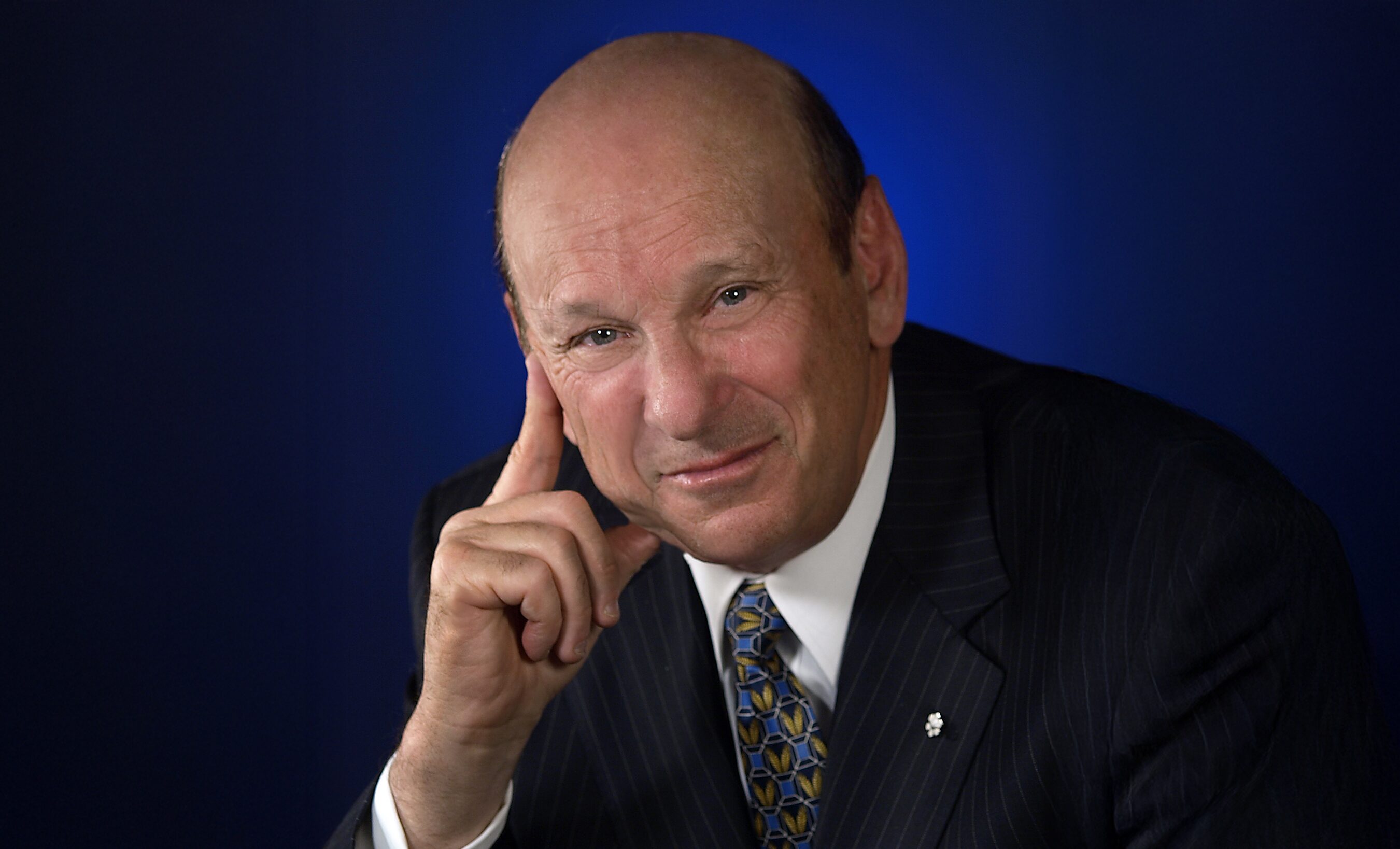
Seymour Schulich – Canadian business legend, one of the country’s greatest entrepreneurs and philanthropists, and a profound supporter of our School – has just released Get Even Smarter, a powerful new addendum to his bestselling book Get Smart.
By Seymour Schulich
I have achieved great success in business being wrong 50% of the time. That’s right: 50%!
This success has enabled me to pay it forward through philanthropy and help future leaders get the head start that a scholarship once gave me.
Recently I looked back on more than 60 years of investing, dealmaking, and company building. I revisited the key events and decisions to analyze how often I achieved big wins. After tallying the results, I was surprised to find that only half were true winners. This insight, along with several other hard-earned lessons, led me to write this addendum to my 2006 book, Get Smarter.
The book was my attempt to share key life lessons, wisdom, and strategies with young people embarking on their careers. Practical lessons were distilled from someone who started with nothing and created something meaningful. My goal was simple: give each reader 20 or 30 ideas they could immediately put to use.
In years since, I’ve had a few epiphanies worth sharing in this follow-up. These may not be groundbreaking revelations for everyone, but they’re hard-won and deeply lived, shaped by age, success, loss, and the kind of perspective that only time can offer. Like my book, they’re meant to help someone get a little smarter about what really matters on the path to a successful and fulfilling life.
Lesson 1: Collect Experiences Before You Pick a Path
I mentioned this briefly in Get Smarter but it deserves emphasis: young people should focus on collecting experiences that they’ll build the rest of their lives on.
We live in a world that expects early polish and instant clarity, pushing kids to make big decisions before they’ve had a chance to try, fail, and figure out who they are. There is too much pressure to declare what you will do, who you will become, and what your path will be, before you’ve had the requisite years of experimenting and developing.
In my experience, most people aren’t even operating at full capacity until around 26. I say that with affection and a fair bit of experience — I have four grandchildren and a lifetime of friends, colleagues, and memories. Most young people just take longer to come into their own. That’s not a flaw; it’s life.
Take my own path. I didn’t have a master plan but I had the space to try things. I worked in cardboard factories and glass plants. I studied chemistry, took engineering courses, and followed my curiosity wherever it led. It never felt like a straight line, but every experience added something. Eventually, all those pieces pointed me toward securities analysis, a nascent field in which I was able to learn, grow and excel as one of the early practitioners.
What helped me most was exploration and exposure. Different jobs taught me grit, tough courses taught me how to think, and mistakes taught me discipline. That’s why I believe you need the chance to try, fail, and discover who you are.
So hear me when I say that you don’t need to have it all figured out by 18 or even 21. If you keep working hard, set and achieve goals, and expose yourself to different experiences and environments, you’re on the right course.
Frankly, you’re doing just fine if you’re more interested in growing than in appearing perfect.
Lesson 2: Better to Try and Fail Than to Never Try at All
If I’ve seen one mistake repeated endlessly, it’s people holding back, waiting for the perfect pitch and playing it safe.
It’s not a tragedy to strike out, but it is a tragedy to stand at the plate and never swing. Too often, people avoid perceived risk when they’re young and take too much risk when they’re older.
I think about this a lot in the context of marriage. In my experience, most men who don’t marry by 36 usually never marry, not because the opportunity isn’t there but because they never tried. You may not get a hit, but it’s far worse to get old and realize you never took a swing. I’m not saying everyone should get married, but if you think you might want to, you should give it a shot.
I got married at 30, and the years that followed showed me what it meant to build something lasting. Marriage, like business, is a bet that forces you to grow and requires you to show up. Over time, it gives your life texture, rhythm, and meaning.
But this lesson isn’t just about marriage — it’s about risk. Whether you’re choosing a partner, launching a business, or chasing a creative idea, the same truth applies: you move forward by moving. You figure things out by trying. If you wait for the perfect conditions — perfect timing, perfect certainty — you’ll still be standing at the plate long after the inning’s over.
Take Goldstrike, for example. When we invested in that Nevada mine, seven companies had already tried and failed to find gold there. But my brilliant partner Pierre Lassonde and I decided to try again when everyone else had given up. That bet paid off: Goldstrike became one of the largest and most profitable gold-mining operations in the world.
Progress comes from motion. Swinging the bat, even if you miss, teaches you the most. Better to try to succeed and make commitments than to spend your life wondering what might have been.
Lesson 3: On Aging, Lived Experience is a Must
As we age, we naturally wonder how life will change. How will our experiences shift our perspective and priorities? How will changes in agility, strength, and health affect us? What can we do now to minimize that decline?
Young professionals rarely think about these questions as they’re focused on building careers, finding partners and enjoying life. But understanding what lies ahead can inform the decisions you make today.
Over the years I’ve read countless books on aging. What dawned on me recently is that most of these books are written by people in their 40s and 50s who simply don’t know what they’re talking about yet.
The truth is that aging isn’t something you can understand intellectually. You have to live it. It’s not falling off a cliff, but rather a slow, steady decline. And the further you go, the more it teaches you about what really matters.
You let go of things, not always by choice. You outlive people you cared about, one goodbye at a time. And you become more selective, shrinking your world to the parts that matter most.
With that comes clarity. You stop pretending. You learn who your real friends are. You protect your energy. And perhaps most importantly, you understand that the most valuable asset you’ll ever manage isn’t money: it’s time.
After all, everyone envies the rich man but the rich man envies youth — not just for the energy or the full head of hair, but for the runway and the chance to spend it better.
This is why those younger authors miss the point. They can theorize about aging, but they haven’t felt the weight of real loss or discovered what survives when everything else falls away. They write about growing old without understanding what it actually costs or what it gives back.
So live a life of bold decisions, learn from every experience, and don’t trust everything you read in a book (except mine).
Lesson 4: You Only Need to Be Right 50% of the time
Remember when I mentioned that only 50% of my deals were successful? Let me explain what I meant.
When people think about investing, they imagine brilliant calls, perfect timing, or some secret formula. But by my analysis, I’ve only been right about half the time. That’s my batting average, and it was enough to become a business success.
Consider Ted Williams, who hit .400 and went down as one of the greatest hitters in baseball history. Four out of 10. That’s all it takes.
I didn’t build wealth by being right all the time but by being right when it mattered. The big money came from a handful of decisions that required real conviction when everyone else was running for the exits. To win big, you need unwavering belief, a meaningful position, and to be right when it counts.
Let’s look at an example:
You have $100 in assets and you see a promising investment opportunity. If you invest $1 and get a 10x return, you end up with $110 total. But if you invest $10 and get the same 10x return, you now have a total of $200 and have doubled your assets.
When you’re right, the gains are significant. When you’re wrong, you may get your money out or face a 30% loss.
Making concentrated bets and being right at least half the time will yield long-term success.
Lesson 5: How to Screen for Low-risk, High-return Stocks
Many professional investors either follow the herd by owning stocks that closely mirror market indices, or chase momentum stocks with high P/E ratios. When market sentiment sours and multiples revert to the mean, these stocks face significant downside risk.
You can avoid the masses and use a different approach that has served me well.
Much of my investing success came from screening for and buying selective stocks at new lows: businesses that once traded at $25 a share and had sunk to $5, staying at depressed levels for many years. These were companies that had fallen out of favor but still had real underlying value. If the fundamentals were sound and they weren’t going broke, that’s where I placed my bet.

Resource and energy companies like Vale, Rio Tinto, and Murphy Oil have all provided examples of this strategy over the years. When cyclical downturns or sector rotation drove down their stocks, I focused on their strong operational capabilities and proven management teams while others fixated on short-term volatility.
The key is patience, as these positions often take time to pay off, and the disciplined focus on underlying value rather than market sentiment. You don’t have to win every time, but you do have to be ready when the right opportunity comes along to invest with conviction.
What Matters Most
I’m often asked what I want to be remembered for: philanthropy, company building, or investments?
But that’s not really the point.
What really matters to me is being useful. My life, and particularly my philanthropic journey, has been guided by one simple question: “How can I be of service?” I care about whether something I’ve written, built, or supported helps people to think differently and make better decisions.
That’s why I’ve devoted significant time and money to removing barriers to education. We’ve established scholarship programs and faculties across Canada and beyond to ensure that bright young minds can focus entirely on their education and potential, creating a network of future leaders who support each other and go on to serve others.
We often receive letters from scholarship recipients — yes, we read every one — and there’s always a common thread: their commitment to giving back. Whether they’re launching programs to teach kids coding, volunteering in their communities, or planning careers in service, they understand that success isn’t just about personal achievement. That really moves me.
Forest Witcraft captured this perfectly: “A hundred years from now, it will not matter what your bank account was, the sort of house you lived in, or the kind of car you drove, but the world may be different because you were important in the life of a young person.”
True legacy looks like enabling others to reach their full potential.
So if you take anything from these lessons, let it be this:
Live a life worth reflecting on. Build your career, develop your skills, and pursue the interests that spark your curiosity. But don’t stop there — ask yourself how you can use your experience to give back. True meaning doesn’t come from success alone. It comes from making a difference and being of service to the next generation.